
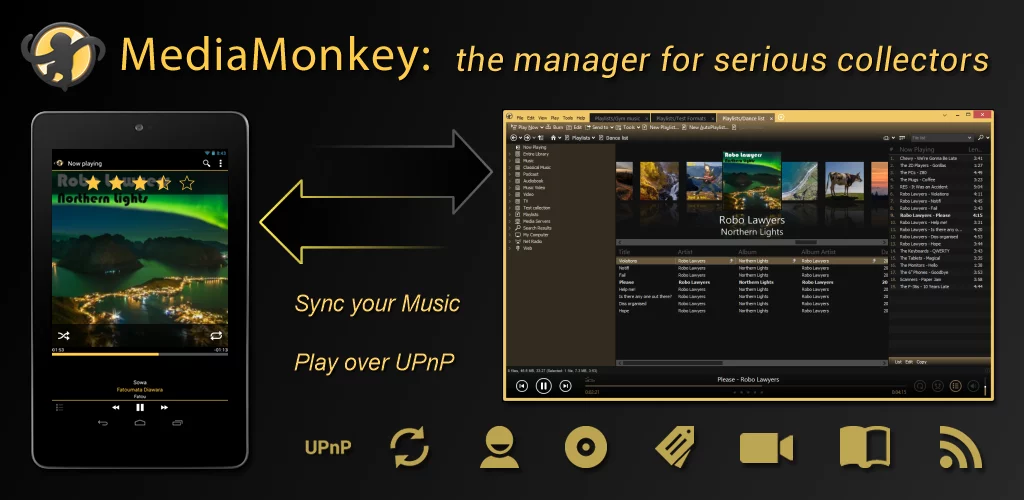
Introduction:
Keeping up with enormous libraries of media files may be difficult in the current digital era. Thankfully, programs like MediaMonkey exist that try to make this procedure easier. MediaMonkey is a feature-rich media management program created by Ventis Media, Inc. to meet a variety of requirements pertaining to audio, video, and podcast files. Always on Display, or AOA, is a useful feature that each phone should have to enhance user use. If you are someone who often uses their phone for many reasons requiring immediate alerts, this application could be a good fit for you. Even in very low light, you will be able to see the necessary information on your phone’s screen without ever having to touch it thanks to this software.
Mediamonkey: What Is It?
With MediaMonkey, users can effectively arrange, play, and synchronize their media files on many devices. It is a powerful media management tool. It offers consumers strong capabilities to simplify the administration of their media libraries by acting as a consolidated platform for all kinds of audio, video, and podcast content.
Qualities:
Not every casting begins at the present position: Casting media files to various devices is one of MediaMonkey’s noteworthy features. In contrast to some other media players, MediaMonkey offers more freedom and ease by enabling users to begin casting from any location within the file.
Modified time left in the playing queue: MediaMonkey gives users the ability to modify the amount of time left in the playing queue, enabling more personalized playback. With the help of this function, customers may remain organized and better manage their playback schedule.
Application of Windows version synchronization for all files and settings: MediaMonkey enables users to synchronize all of their media files and settings across multiple devices with ease, guaranteeing a consistent experience on all platforms. For customers who often transfer between several devices, this function is very helpful.
Management of all podcast, video, and audio file formats: MediaMonkey facilitates the management of a wide range of media file formats, including podcast, video, and audio files. Users may arrange their files according to many parameters, including folders, artists, genres, and more, which facilitates navigation and helps them find particular material.
Sorting all file kinds according to various attributes: With the extensive file categorization options provided by MediaMonkey, users may arrange their music collection according to a number of criteria, including genre, album title, artist, and folder structure. This facilitates the browsing and management of huge media file collections.
Playing diverse file types with support for different codecs: MediaMonkey is compatible with a broad variety of media file types since it supports a large number of file formats and codecs. MediaMonkey can easily handle every common format, including MP3, AAC, FLAC, AVI, MKV, and others.
Operating Chromecast files and supporting UPnP and DLNA servers: MediaMonkey enables users to effortlessly stream their media files to devices that are compatible with UPnP, DLNA, and Chromecast servers. By allowing consumers to enjoy their media material on many displays, this feature increases MediaMonkey’s adaptability.
Save your favorite files: MediaMonkey allows users to save their preferred media files for convenient and fast access. This functionality comes in useful for those who wish to make custom playlists of their favorite songs or films or who often return certain material.
Make a playlist of well-liked songs: MediaMonkey provides a handy playlist building tool that enables users to assemble a collection of their most well-liked or often played songs. It’s simpler to queue up desired material for playing when users can tailor their playlists to suit their tastes and mood.
Broad search function among accessible files: MediaMonkey’s broad search feature helps customers find certain media files in their collection fast. Through various search parameters like as file name, artist, album, or other criteria, users may easily locate what they’re looking for, saving time and effort.
Advantages:
Huge Song Selection: MediaMonkey accommodates a variety of musical tastes by providing a vast selection of popular songs from a number of genres, including pop, rock, classical, and soundtracks.
basic Search Function: This feature makes it easier for users to locate desired music inside the app by allowing them to easily find certain songs by inputting basic search phrases.
Rich Podcast Selection: MediaMonkey offers a vast collection of podcasts across a range of subjects, giving consumers access to international entertainment and informative material.
Podcast Previews: Listeners may assess the relevancy and quality of the material before dedicating themselves to completely listening to a podcast episode by previewing it.
Lyrics Display: MediaMonkey enhances users’ listening and understanding by displaying lyrics and other information during podcast presentations and music playback.
Community participation: By welcoming user comments and enhancement requests, MediaMonkey promotes a feeling of community participation and gives users the opportunity to participate in the app’s development.
Sleep and Alarm Support: The app has tools to help you schedule your sleep sessions and improve the quality of your slumber by playing relaxing music at the right times. In addition, users may customize the playback parameters and set alarms.
Cons:
Restricted Music Playlist Browsing: MediaMonkey does not allow users to peruse through all of the music playlists that are accessible inside the app, which can make it more difficult to find new music.
Complex Music Organization: Although MediaMonkey provides a wide variety of choices for categorizing music, some users may find the settings for arrangement and organization to be too complex or difficult to use.
Restricted Audiobook range: Although the app includes audiobooks by well-known authors worldwide, its range of audiobooks could be less than that of specialized audiobook platforms.
Complexity of the input Process: Although user input is welcomed, some users may find it difficult to leave reviews or comments inside the app, which might lower the amount of feedback that is received.
Complexity of Playback Customization: Changing playback parameters, including volume, pitch, and speed, may need users to go through a number of menus, which may make the user experience a little difficult.
Faq About Mediamonkey:
1. First off, what is MediaMonkey?
Ventis Media, Inc. created the powerful but lightweight MediaMonkey music player. It makes it simple for customers to organize and synchronize large music libraries across many devices.
2. What are MediaMonkey’s salient characteristics?
Sync playlists, music, movies, and file metadata across devices using MediaMonkey for Windows.
Easy-to-use interface for handling different media: You may effortlessly browse among audiobooks, podcasts, videos, classical music, and music. Easily organize playlists, search the library, and edit file metadata.
Handle Playlists: Create hierarchical playlists, use MediaMonkey for Windows to sync playlists, and add, delete, and reorder music.
Skillful queue manager and player: Take advantage of consistent volume playback, adjust music with a 5-band equalizer, schedule a nap session, share your play history with other players, cast to UPnP/DLNA or Google Chrome Cast devices, and bookmark big files.
Support for Android Auto: Use Android Auto to access MediaMonkey while operating a vehicle.
Media may be accessed and downloaded using UPnP/DLNA servers: Stream media files straight inside the app from UPnP/DLNA servers.
Themes, shared songs, player widgets, and ringtones: Use player widgets to personalize your music experience. You can also apply different themes, share your favorite songs, and make tunes into ringtones.
3. Is a trial version of MediaMonkey accessible?
Yes, MediaMonkey provides a trial with a time restriction. Nevertheless, MediaMonkey Pro may be used to unlock the trial. The trial period allows for unfettered USB Sync.
4. How is data security and privacy addressed by MediaMonkey?
Ventis Media, Inc. is dedicated to the privacy and openness of its users. User data is not collected, used, or shared by MediaMonkey unless it is necessary for operation or service delivery. Data management procedures include encrypting acquired data and deleting it after a certain amount of time.
5. What authorizations is MediaMonkey in need of?
As is customary for media player apps, MediaMonkey may ask for access to the camera, external storage, contacts, settings, network, Wi-Fi, battery optimizations, wake lock, and shortcut installation, among other things. Certain features need these rights, including the ability to scan QR codes, write to shared media files, set music as ringtones, modify system preferences, access network services, stop the computer from shutting down while using it, and create custom shortcuts.
Mediamonkey Installation Instructions:
Step;1 First, get MediaMonkey.
- Go to MediaMonkey’s official website or use the app store on your device.
- Look for the Ventis Media, Inc. app by searching for “MediaMonkey.”
- To start the download process, click the install or download option.
Install MediaMonkey in Step Two.
- Find the downloaded file on your device when the download is finished.
- To start the installation procedure, tap on the file that has been downloaded.
- Install MediaMonkey on your device by following the directions shown on the screen.
Step 3: Assign the Required Permissions
- For appropriate operation, MediaMonkey could ask for certain permissions during the installation process.
- Permit access to contacts, storage, and the network, among other things, as needed to ensure smooth functioning.
Step Four: Open MediaMonkey.
- Find the MediaMonkey symbol on your device’s home screen or app drawer after a successful installation.
- To open MediaMonkey and begin exploring its capabilities, tap on the icon.
Step 5: Optional: Register or Sign Up
- You may be able to join in to MediaMonkey using an already-existing account or create a new one.
- You can sync your media across devices and get extra services by logging in.
Step 6: Adjust Preferences (Optional)
- Go through the options menu to adjust MediaMonkey to your tastes.
- Make appropriate configurations to the playback settings, themes, and other parameters.
Enjoy MediaMonkey in Step 7!
- Your device is now equipped with MediaMonkey installed and operational.
- Examine its functions, organize your music collection, make playlists, and take advantage of the smooth device syncing.
Final Words
In conclusion, for customers looking to arrange, play, and synchronize their podcast, video, and audio files, MediaMonkey stands out as a complete media management tool. MediaMonkey is a feature-rich and easy-to-use platform for managing media collections of any size. Its features include various casting choices, comprehensive file categorization, seamless synchronization, and broad codec compatibility. Regardless of your level of listening, MediaMonkey gives you the resources you need to take charge of your media consumption.